R&D SERVICES FOR FOUNDRIES AND STEELWORKS
From industrial challenge to material solution.
Turning your industrial challenges into high-performance material solutions. At EXOTERM, our research and development isn't theoretical; it is a practical response to the real-world demands of foundries and steelworks. We partner with you to refine every metallurgical detail, ensuring our innovation supports your specific production goals.
We build customized materials designed to thrive under your process conditions. By focusing on the unique variables of your facility, we ensure that every formulation delivers targeted properties. If a solution works perfectly for your toughest application, it sets a new standard for your entire production line.
Energy & Resource Efficiency
We develop solutions that perform better while helping customers use energy and resources more efficiently. Together, we explore how material selection and process parameters can reduce environmental footprints.
Circular Materials
Resource efficiency is key. We actively investigate the use of recycled, secondary, and circular raw materials to minimize material losses and maximize the value of resources within your process.
Data-Driven Sustainability
Improvements should be measurable. We evaluate energy consumption, material efficiency, and carbon footprints using real production data to identify genuine improvement opportunities.
Testing & Validation
Laboratory testing, industrial trials and validation under real production conditions.
Process Optimisation
Analysis of material behaviour, consumption, application parameters, energy demand and production results to identify opportunities for improved process efficiency, lower resource consumption and reduced environmental impact.
Custom Development
Development and adaptation of metallurgical materials according to customer requirements, process conditions and target properties.
Joint Innovation
Collaborative R&D projects with customers, research organisations and technology partners – from initial idea and laboratory testing to industrial demonstration.
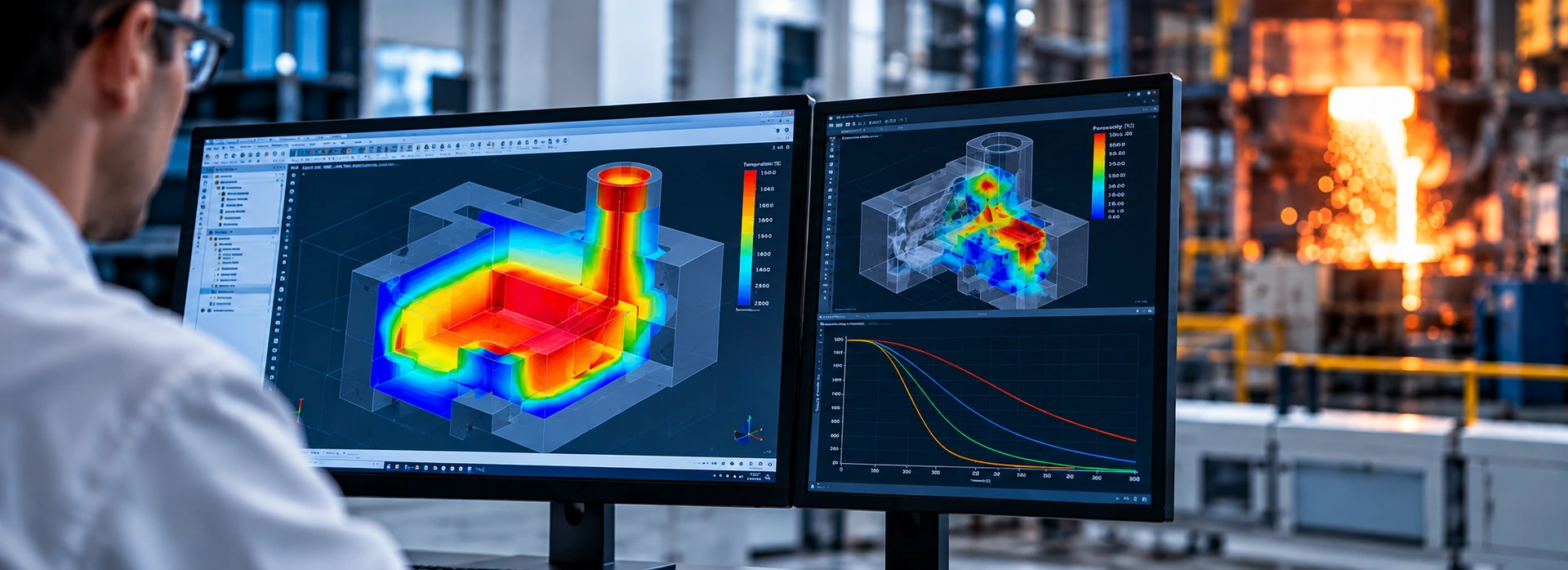
This allows us to identify improvement opportunities based on real production data rather than assumptions, evaluating key metrics such as:
- · Energy consumption
- · Material efficiency
- · Process performance
- · Waste reduction
- · Circular material use
- · Carbon footprint
Our approach is supported by practical experience from our own production. By combining process digitalisation, energy monitoring, and smart control systems, we continuously improve the efficiency of our manufacturing processes and reduce the carbon footprint associated with our products.